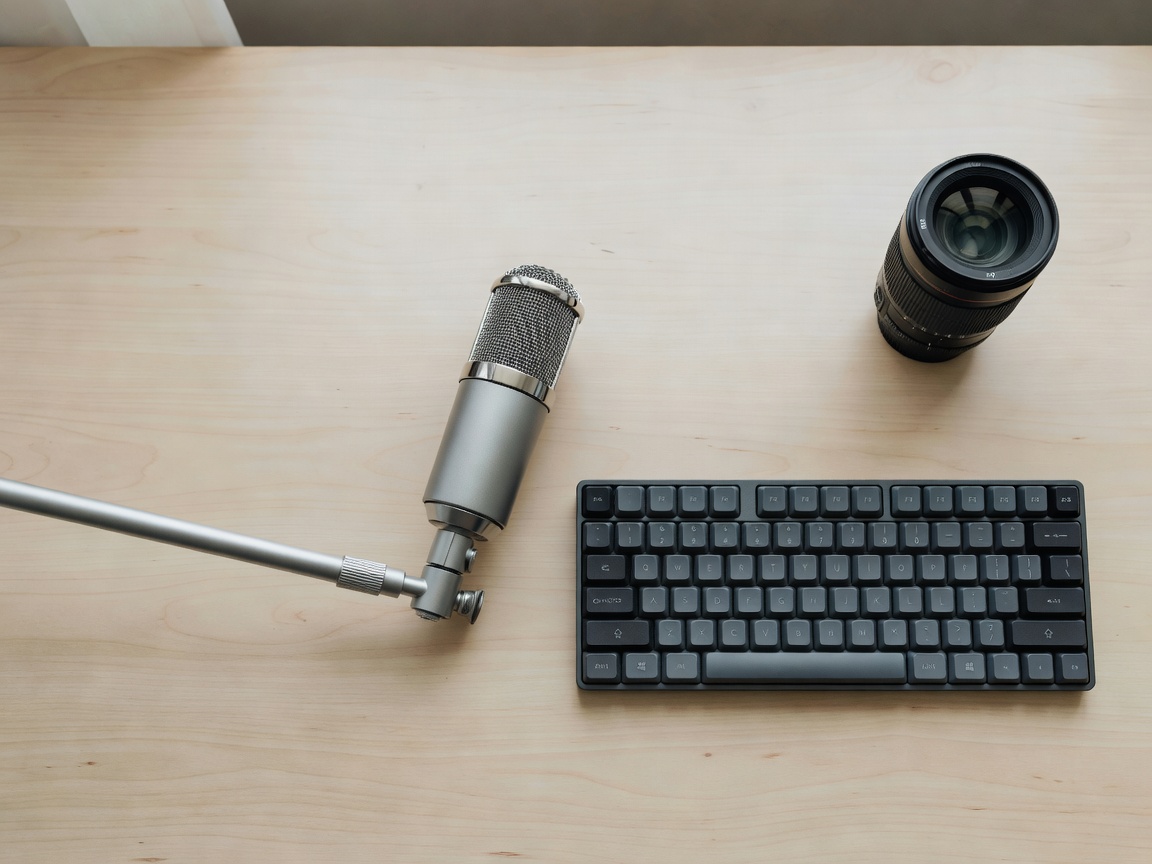
The most common error new creators make is allocating their entire initial budget to a high-end cinema camera, leaving nothing for audio, lighting, or set design. In digital media, the perceived production value of a video is rarely dictated by the resolution of the sensor. Instead, it is a composite of clear sound, intentional lighting, and engaging delivery.
When structuring your initial capital expenditure for a content business, a phased approach is advisable. Buy what solves your immediate production bottlenecks, and rent or make-do for the rest until revenue justifies the upgrade.
The Audio Imperative
Audiences will tolerate grainy, low-resolution video if the content is compelling. They will not, however, tolerate echoing, distorted, or muffled audio. Poor audio causes immediate viewer abandonment.
Your first investment should be a dedicated microphone. The category you choose depends on your format:
- Dynamic Microphones: Excellent for podcasting, streaming, or untreated rooms. They reject background noise well but require the speaker to be very close to the capsule.
- Condenser Microphones: Capture more detail and nuance but will pick up every echo in a bare room and the sound of traffic outside. They require acoustic treatment to shine.
- Shotgun Microphones: The standard for video production where the microphone must remain out of frame. They are highly directional.
- Lavalier (Lapel) Mics: Essential for moving subjects or when recording in varied environments. Wireless systems have become highly accessible and reliable.
"If you have $1000 to start a YouTube channel, spend $400 on audio, $300 on lighting, and use your smartphone as the camera."
Lighting: Shaping the Image
A $5,000 camera looks amateurish in bad lighting. A modern smartphone looks cinematic when lit correctly. Lighting is about creating depth, separation, and mood.
The standard three-point lighting setup remains the foundation of most studio content. A key light provides the main illumination on the subject, a fill light softens the shadows created by the key, and a back (or hair) light separates the subject from the background, providing a three-dimensional feel.
Continuous LED lighting has revolutionized this space. Look for lights with high CRI (Color Rendering Index) ratings, which ensure skin tones look natural rather than having a green or magenta cast. Softboxes or diffusion panels are non-negotiable; bare LED bulbs create harsh, unflattering shadows.
The Camera: Diminishing Returns
Only after audio and lighting are secured should you look at upgrading your camera. Most creators begin with their smartphone, which is entirely sufficient for platforms prioritizing vertical, short-form content.
When transitioning to a dedicated mirrorless camera, prioritize lenses over the camera body. A fast lens (one with a wide aperture, like f/1.8 or f/2.8) allows more light into the sensor, improving low-light performance and creating the sought-after blurred background (shallow depth of field) that isolates the subject. Camera bodies depreciate rapidly; good glass lasts a lifetime.
Storage and Infrastructure
A frequently ignored aspect of gear is data management. High-resolution video generates massive files. A robust workflow requires fast external SSDs for active editing and larger, redundant HDD arrays (like a NAS setup) for archiving. Relying on a single external drive is a catastrophic failure waiting to happen. The rule of three applies: three copies of your data, on two different media, one of which is off-site (cloud storage).